
A deal desk is a coordinated review process for commercial deals that need input from sales, finance, legal, or other teams. It gives a proposed deal an owner, routes exceptions to the right decision-makers, and records what was approved.
You do not need a new department to start. You need a shared intake, clear approval authority, and a way to distinguish routine agreements from decisions that require discussion.
When does a company need a deal desk?
Look for recurring problems: sales cannot tell who owns a review, discounts arrive after finance has approved the quote, legal sees the contract after custom commitments have been made, or the same exception gets negotiated from scratch every time. A deal desk can give those decisions a repeatable path.
Deal value is only one factor. A small agreement can still introduce sensitive data, unusual liability, or a product commitment the company cannot support.
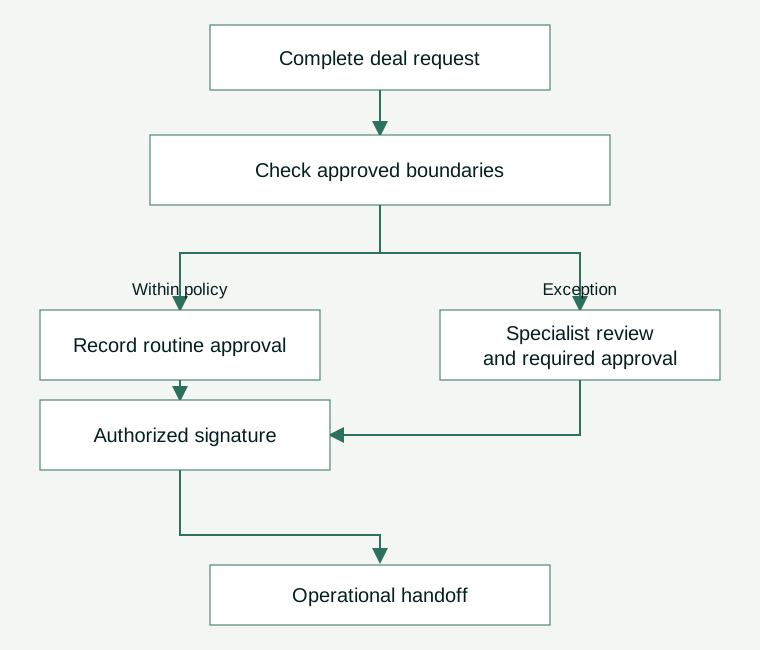
A practical deal desk process
- Collect a complete request. Include the customer, deal owner, product, commercial terms, proposed agreement, requested changes, and target signature date. Explain what is driving the deadline.
- Check the approved boundaries. Compare the request with current pricing authority, contract templates, and escalation rules. Missing information goes back to the deal owner.
- Route exceptions together. Involve the teams affected by the actual issues. Legal, finance, security, and product can review their questions concurrently when the decisions are independent.
- Record the decision. Capture the approved position, any conditions, the person with authority to approve it, and the version of the agreement covered.
- Sign and hand off. Use an authorized signatory, store the executed documents, and send implementation, billing, and renewal obligations to their owners.
Deal desk approval matrix
Use this as a starting point for an internal policy. Assign named owners and backups, and agree on thresholds that reflect your business. These are suggested review roles, not automatic authority to bind the company.
| Trigger | Suggested reviewers | Decision to record |
|---|---|---|
| Approved terms and pricing, with no escalation trigger | Sales or operations, within delegated authority | Applicable template, pricing approval, and authorized signatory |
| Discount, payment, credit, or billing exception | Finance and the commercial owner | Approved economics and any conditions |
| Nonstandard liability, indemnity, warranty, or termination terms | Legal and the business owner | Accepted risk, fallback language, and required approval |
| Customer data or security commitments | Security, privacy, and legal | Supported controls, data use, and implementation requirements |
| Custom features, support, or delivery promises | Product, engineering, or the delivery team | Feasibility, ownership, cost, and agreed timing |
| An exception outside the reviewers’ authority | The designated executive or other authorized approver | Decision, rationale, conditions, and accountable owner |
Which deal desk KPIs are useful?
Define the start and end of each measure before reporting it. A signature delay can reflect the customer’s budget cycle, incomplete intake, or a product decision; it should not automatically be attributed to legal.
| Measure | Definition | What to investigate |
|---|---|---|
| Time to first response | Complete intake received to the first substantive response | Queue size, coverage, and triage |
| Review turnaround | Review started to the reviewer’s response; record waiting periods separately | Complexity, missing decisions, and team capacity |
| Exception rate | Deals needing an exception divided by deals reviewed in the same period | Recurring friction in templates or pricing rules |
| Rework | Requests returned for missing information or repeated approval | Intake quality and unclear ownership |
| Time to signature | Complete request received to the last required signature | The full deal cycle, including customer waiting time |
Do you need deal desk software?
Start with the process. A shared request form and tracker may be enough for a small volume of deals. A CRM or contract platform becomes more useful when it can enforce your approval rules, preserve document versions, and connect signed obligations to the teams that carry them out. Evaluate the cost against actual volume and administrative work.
Start with one type of agreement
Choose a recurring agreement, map its common exceptions, and agree on the review owners. Set realistic response targets based on capacity. Review the first set of requests together and adjust the policy where requests stall. Expand the process once the team understands how it works.